
10 Most Beautiful and Interesting Places To Visit in Kenya
A country of great diversity — both physically and culturally — Kenya is one of Africa's most captivating destinations. From wildlife-rich savannahs and shimmering Rift Valley lakes to volcanic peaks and lush highland forests, there is something extraordinary at every turn.
Whether you're planning your first safari or returning for another unforgettable adventure, Kenya consistently delivers. In this guide, we count down the ten most beautiful and interesting places to visit in Kenya, so you know exactly where to go and what to expect.
Masai Mara National Reserve
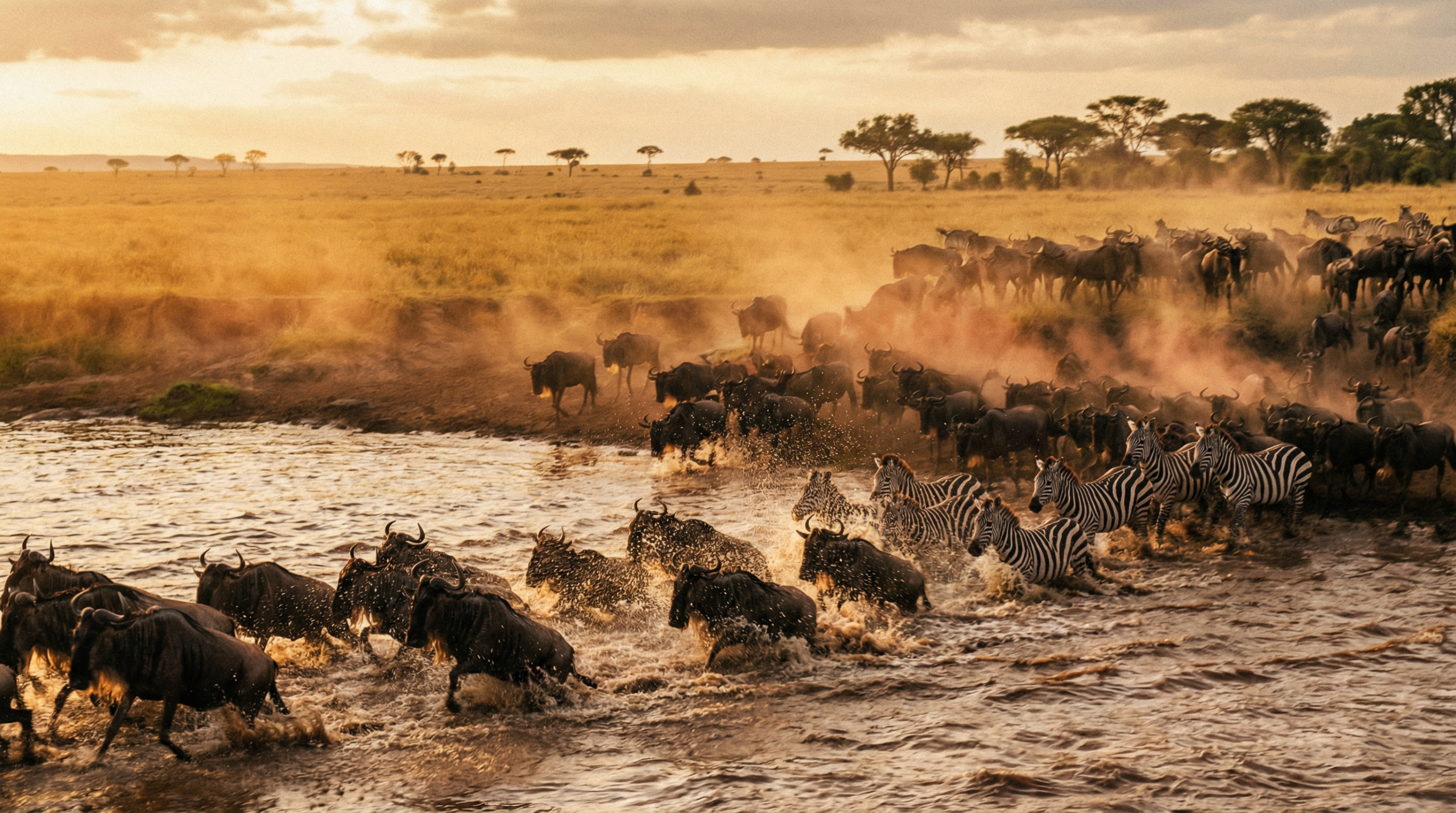
Wildebeest crossing the Mara River — one of nature's greatest spectacles
No list of Kenya's most beautiful places would be complete without the Masai Mara National Reserve. Stretching across 1,510 km² of open savannah in southwestern Kenya, it is widely regarded as one of the finest wildlife destinations on the planet — and for very good reason.
The Masai Mara is home to an exceptional concentration of big cats. Lions, leopards and cheetahs are all spotted with remarkable regularity, making it one of the best places in Africa for predator sightings. Elephants, buffalo, hippos and over 450 bird species round out an already extraordinary wildlife roster.
Then there is the main event: the Great Wildebeest Migration. Every year, nearly two million wildebeest, half a million Thomson's gazelles and hundreds of thousands of zebras follow the rains across the Serengeti in Tanzania and into the Masai Mara. The most dramatic moment comes between July and October, when the herds attempt the famous Mara River crossings — braving crocodile-filled waters in thundering masses. It is an experience that leaves visitors speechless every single time.
To truly escape the crowds, consider staying in one of the private conservancies bordering the reserve, which offer exclusive game drives, bush walks and night drives not permitted in the main park.
Amboseli National Park
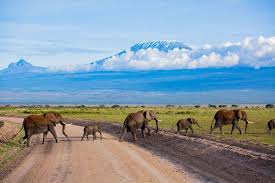
Amboseli's iconic elephants beneath the snows of Kilimanjaro
For sheer photographic drama, it is hard to top Amboseli National Park. Situated in southeastern Kenya near the Tanzanian border, the park sits directly beneath the mighty, snowcapped peak of Mount Kilimanjaro — the world's highest free-standing mountain at 5,895m. On clear mornings, the sight of elephants silhouetted against this colossal backdrop is nothing short of jaw-dropping.
Amboseli is particularly famous for its large-tusked elephants. The park's elephant population has been studied continuously for over five decades, making it one of the best-understood elephant communities in the world. Watching a family herd of 40 or 50 individuals move across the dusty plains with Kilimanjaro gleaming behind them is a memory you will carry forever.
Beyond elephants, Amboseli hosts lions, cheetahs, hyenas, buffalo, giraffe, zebra and a rich birdlife. The park's swamps and wetlands — fed by underground meltwater from Kilimanjaro — attract pelicans, African spoonbills, martial eagles and bee-eaters, among many others.
Lake Nakuru National Park
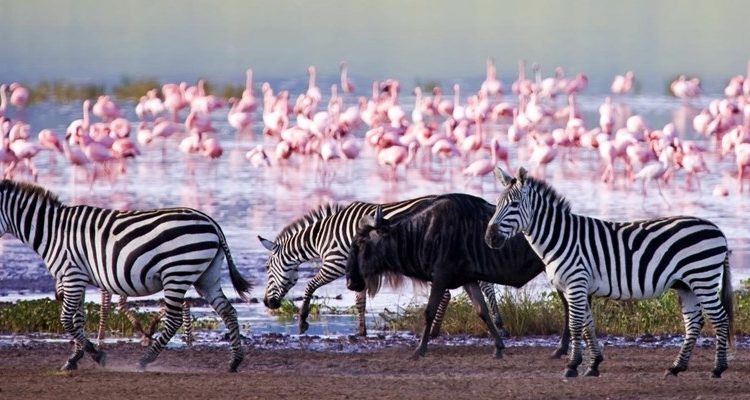
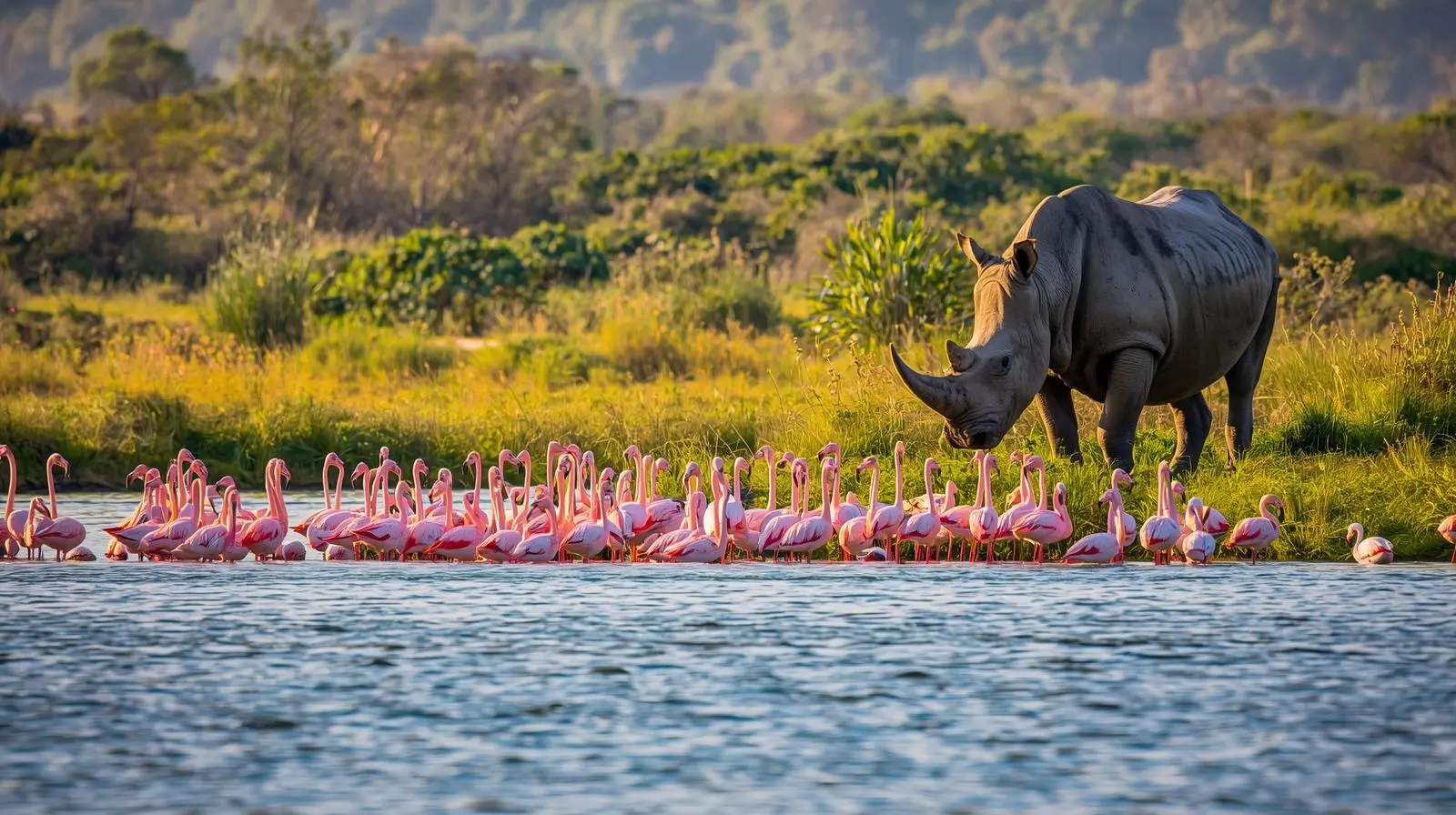
Lake Nakuru's legendary flamingos — and its rare white rhinos
Nestled in Kenya's Rift Valley, Lake Nakuru National Park is a birder's paradise and one of the country's most visually striking destinations. The park's shallow, alkaline lake has historically hosted flocks of lesser and greater flamingos numbering over a million birds — when present, they turn the lake's shoreline into a shimmering, undulating ribbon of pink. Numbers fluctuate seasonally, so it is worth checking conditions before you visit, but even a fraction of that spectacle is utterly mesmerising.
Beyond flamingos, Lake Nakuru is an Important Bird Area hosting over 450 species, including pelicans, African fish eagles, Verreaux's eagles, Goliath herons and hamerkops. The lake is surrounded by acacia and euphorbias woodlands, which provide habitat for buffalos, waterbuck, leopards and lions.
Lake Nakuru is also one of Kenya's key sanctuaries for both black and white rhinos, making it one of the more reliable places in the country to tick the rhino off your Big Five list. Rothschild's giraffes — one of the world's most endangered giraffe subspecies — also roam the park.
Hell's Gate National Park
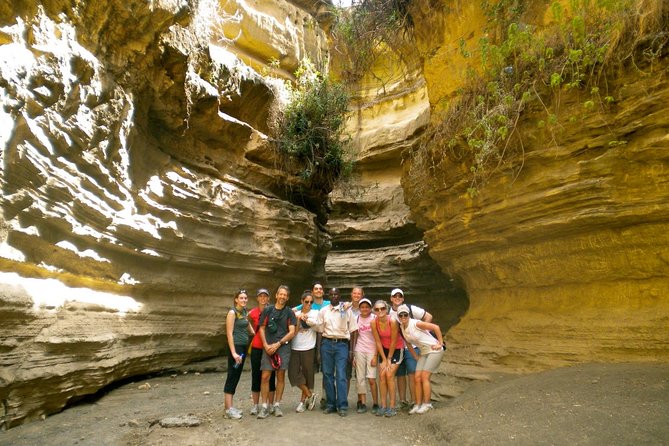
Hell's Gate's dramatic gorges — one of the most unique national parks in Africa
Hell's Gate National Park is unlike any other park in Kenya — or Africa. Located near Lake Naivasha in the Rift Valley, this compact, geologically dramatic park is defined by towering red cliffs, deep volcanic gorges, steaming geothermal vents and basalt columns sculpted by millennia of erosion. It is, quite simply, one of the most visually spectacular landscapes in East Africa.
What sets Hell's Gate apart from other Kenyan parks is that you can explore it on foot or by bicycle — activities that are rare in most wildlife areas. Cycling through the park at zebra eye-level, with giraffes grazing nearby, is an experience that feels genuinely magical. Walking through Fischer's Tower, a soaring volcanic plug, and descending into the park's famous gorge — where geothermal hot springs bubble up between the canyon walls — is equally unforgettable.
Wildlife includes giraffes, zebras, buffalos, elands, klipspringers and a healthy population of Maasai ostriches. Raptors are a particular highlight, with lammergeiers, augur buzzards and Verreaux's eagles frequently seen riding the thermals above the cliffs. The park's proximity to Nairobi (roughly 90km) makes it an ideal day trip or a wonderful complement to a Naivasha itinerary.
Ol Pejeta Conservancy
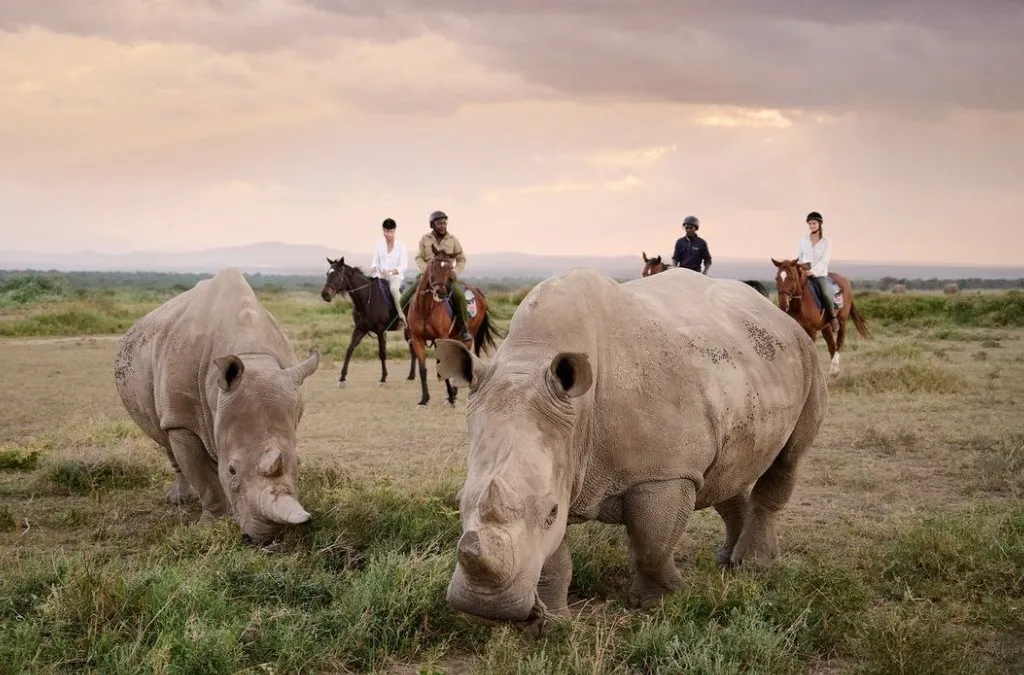
Ol Pejeta — home to the world's last northern white rhinos
Ol Pejeta Conservancy is arguably Kenya's most important and innovative wildlife sanctuary. Covering 90,000 acres in Laikipia, between Nanyuki and the slopes of Mount Kenya, it is the largest black rhino sanctuary in East Africa and the only place on Earth where you can see the last two northern white rhinos — both females, carefully monitored in a heroic effort to save the subspecies through assisted reproduction.
Beyond its extraordinary rhino conservation story, Ol Pejeta is an outstanding general wildlife destination. It is one of the few places in Kenya where visitors can see all of the Big Five: lion, leopard, elephant, buffalo and rhino, often in a single game drive. Cheetahs thrive here too — Ol Pejeta has one of the highest densities of cheetahs in Kenya — along with wild dogs, hippos, Grevy's zebras and over 550 bird species.
The conservancy also hosts the Chimpanzee Sanctuary — the only place in Kenya where you can see chimpanzees, rescued from across Africa and given a permanent home here. Ol Pejeta blends world-class conservation, community engagement and exceptional safari experiences in a way that few other destinations manage.
Nairobi National Park
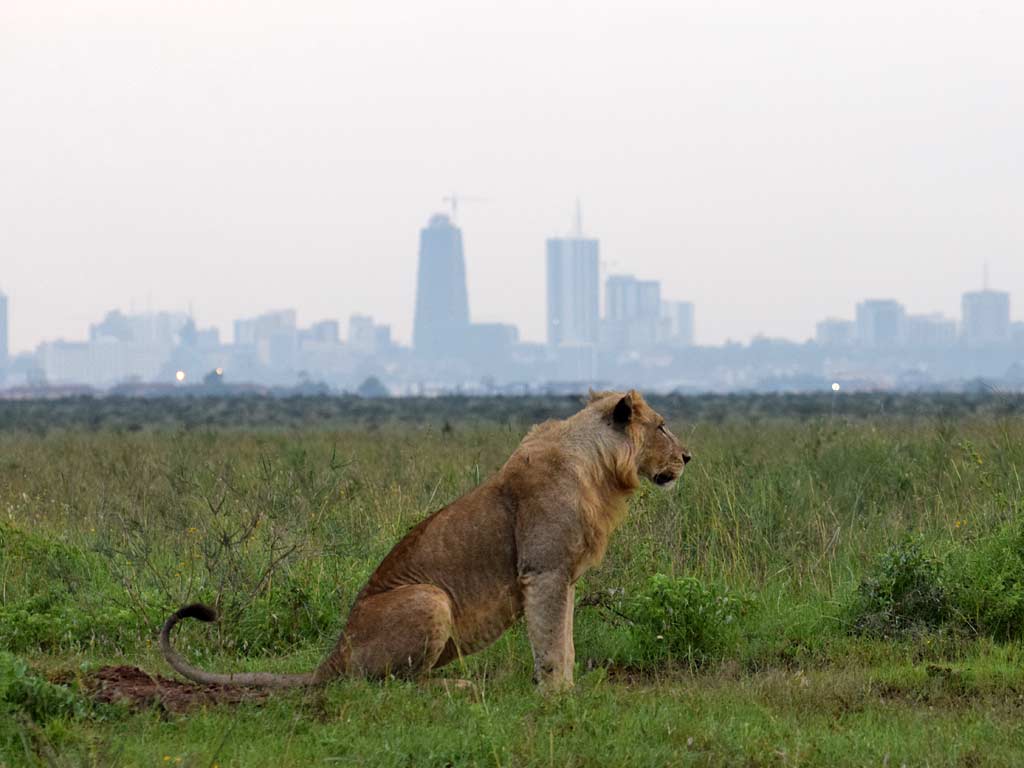
Lions prowling just minutes from Nairobi's city skyline — a truly unique phenomenon
Nairobi National Park is one of the world's most remarkable conservation stories. Located just 7km from the centre of Kenya's bustling capital, it is the only national park in the world that sits directly on the edge of a major city. Here, lions, cheetahs, rhinos and giraffes roam against a backdrop of Nairobi's glittering skyscrapers — a surreal and genuinely moving juxtaposition.
Despite its relatively compact size (117 km²), the park punches well above its weight in terms of wildlife. It is one of the best places in Kenya to see black rhinos, which have been successfully protected here for decades. Leopards, buffalos, zebras, ostriches, hyenas and over 400 bird species also call the park home. The southern boundary is unfenced, allowing wildlife to migrate freely between the park and the Kitengela plains during the dry season, which keeps the ecosystem dynamic and healthy.
For travellers with limited time, Nairobi National Park offers an extraordinary opportunity to experience genuine African safari wildlife without leaving the capital — it is possible to be watching lions at sunrise and attending a Nairobi business meeting by mid-morning.
Aberdare National Park
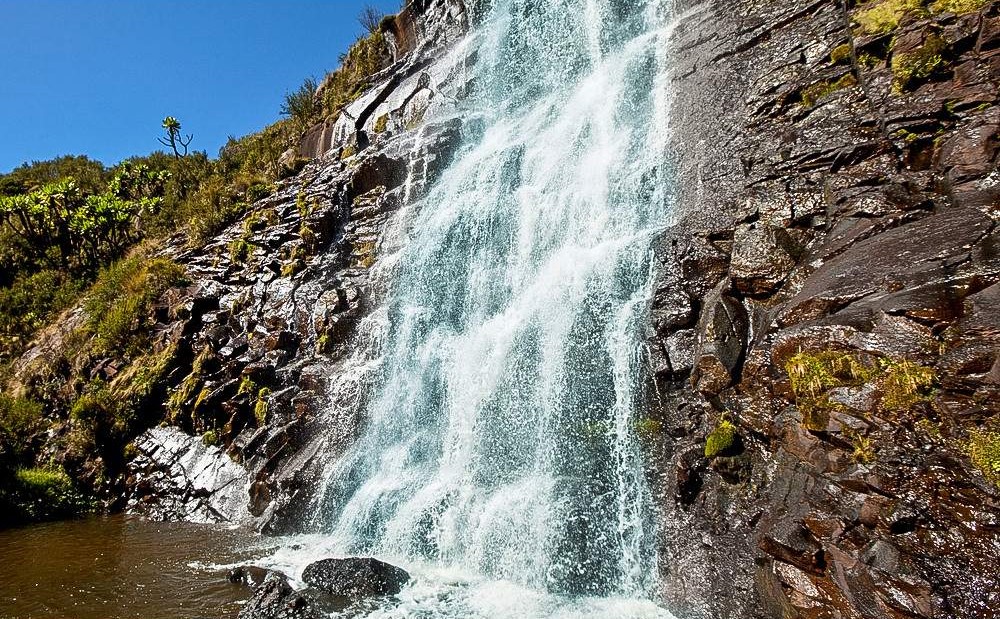
The Aberdare's mist-wrapped moorlands and ancient forests
For something quite different from the open savannah experiences that dominate the Kenya safari circuit, Aberdare National Park is a revelation. Located in the central highlands north of Nairobi, this highland park encompasses dense mountain rainforest, bamboo groves, heathland and open montane moorland, reaching altitudes of over 4,000m.
The Aberdares are famous for their spectacular waterfalls. The Karura Falls and the Gura Falls — one of the highest in Africa — tumble dramatically through the misty forest, and the park's rivers and streams give it an almost primeval, prehistoric atmosphere. It is also one of the best places in Kenya to spot the rare and elusive bongo antelope, alongside black rhinos, elephants, leopards, hyenas and the endemic Aberdare cisticola.
The park is home to Kenya's most famous colonial-era tree hotels — Treetops (where Princess Elizabeth learned she had become Queen in 1952) and The Ark — where guests watch wildlife gather at floodlit waterholes through the night. It is an experience steeped in history and utterly unique to Kenya.
Samburu National Reserve
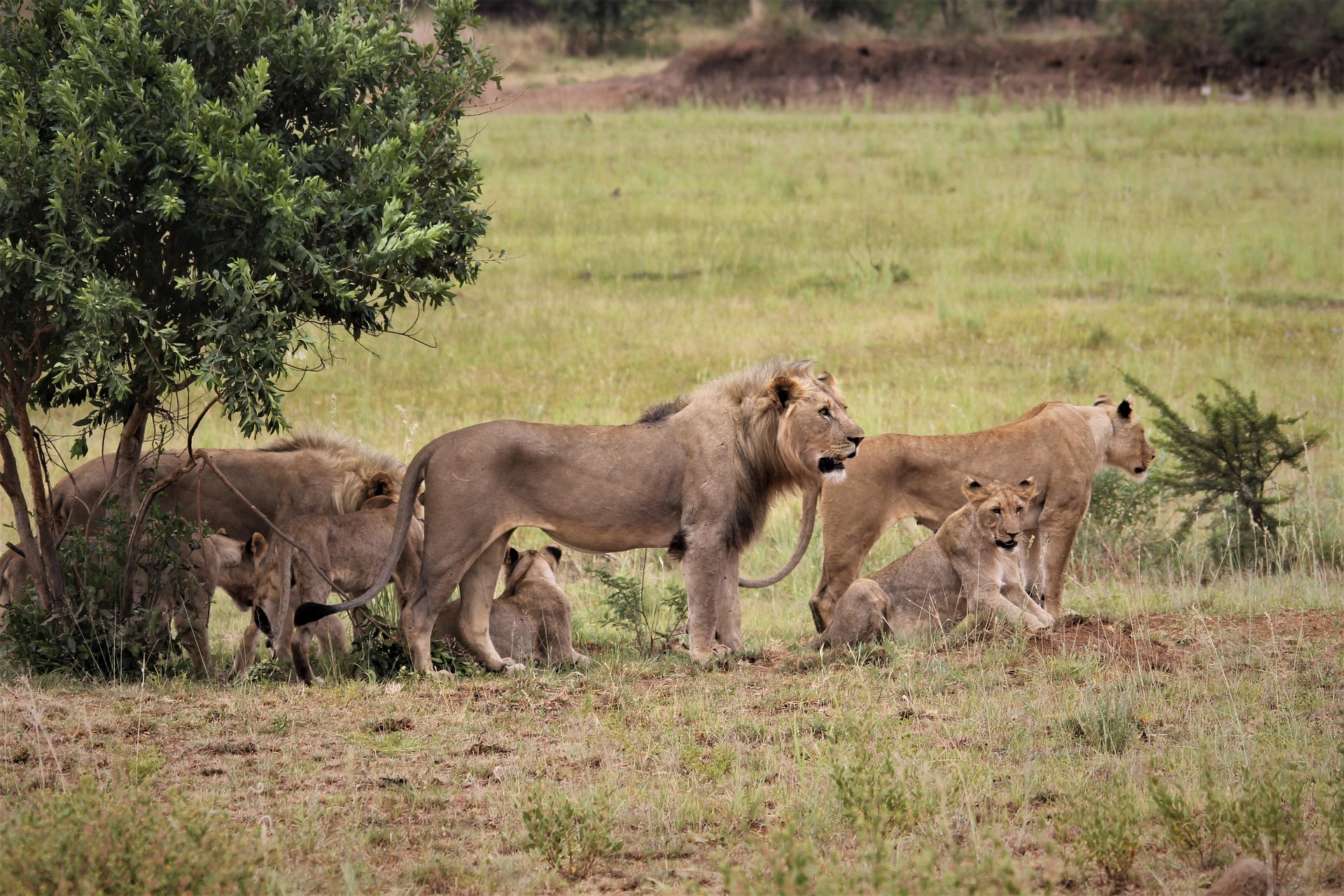
A pride of lions at rest in Samburu — northern Kenya at its wildest
In Kenya's remote and arid north, Samburu National Reserve occupies a beautiful stretch of the Ewaso Ng'iro River, where doum palms, acacias and rocky hillsides create a landscape dramatically different from the more familiar southern savannah. This semi-arid terrain has a raw, almost untouched quality that attracts travellers seeking a less-trodden path.
Samburu is particularly celebrated for the "Samburu Special Five" — five remarkable animals found here but rarely seen in other Kenyan parks: the reticulated giraffe (the most beautiful of all giraffe subspecies), Grevy's zebra, Beisa oryx, gerenuk (the long-necked antelope that feeds standing on its hind legs) and Somali ostrich. These species alone make Samburu a compelling destination for wildlife enthusiasts.
The Ewaso Ng'iro River also brings predators and prey together in dramatic fashion. Large crocodiles bask on the muddy banks, while lions, leopards and cheetahs patrol both sides. Elephant herds regularly wade across the river, and vervet monkeys and olive baboons are omnipresent. The Samburu people, who live on the outskirts of the reserve, offer fascinating cultural visits that add depth to any Samburu experience.
Diani Beach
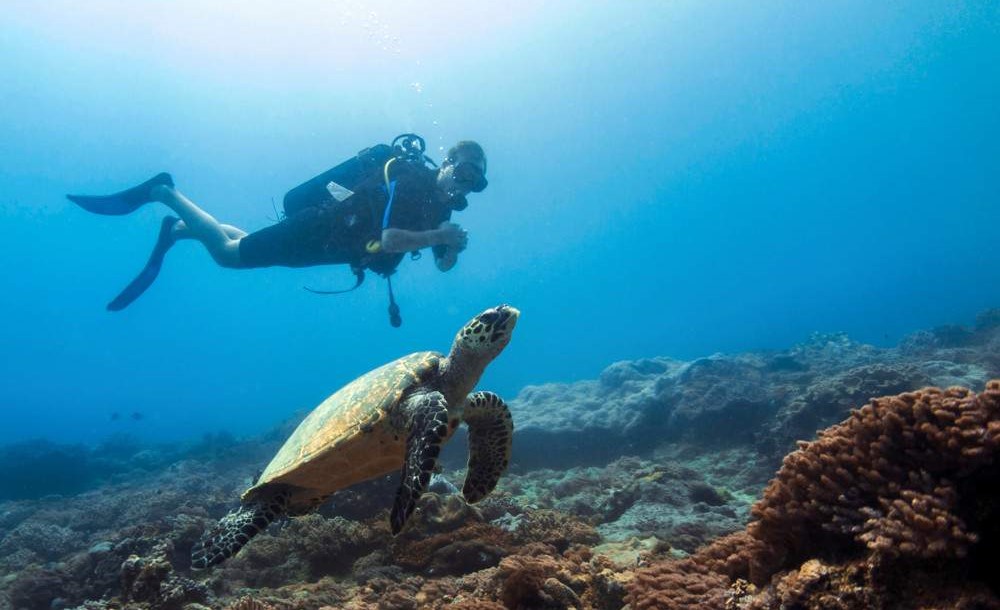
Diani Beach — Kenya's most celebrated stretch of Indian Ocean coastline
Kenya is not only about safari. The country's Indian Ocean coastline is lined with some of the most beautiful beaches in the world, and none more famous than Diani Beach. Stretching for roughly 17km along the south coast, about 30km from Mombasa, Diani's powder-white sands, swaying palms and brilliant turquoise waters have earned it multiple "Best Beach in Africa" awards — and one visit makes it very clear why.
The beach itself is magnificent, but Diani's appeal extends well beyond sunbathing. The coral reef just offshore is a vibrant marine ecosystem, ideal for snorkelling and scuba diving. Dhow cruises at sunset, whale shark encounters, kite surfing, and glass-bottom boat tours are popular pastimes. Diani is also one of the few places on Earth where you can watch colobus monkeys leaping through coastal forest canopy — the Colobus Conservation centre here is doing vital work to protect them.
Diani makes a perfect add-on to a Kenya safari — a few days of beach relaxation after the exhilaration of the bush is a combination that many travellers consider close to perfect.
Mount Kenya
The forests and moorlands of Mount Kenya — Africa's second-highest peak
Standing at 5,199m, Mount Kenya is the country's namesake and its highest point — Africa's second tallest mountain after Kilimanjaro. A UNESCO World Heritage Site and Biosphere Reserve, Mount Kenya is a stratovolcano formed around 3 million years ago when the East African Rift opened up. Today, its rugged, glacier-capped peaks and sweeping equatorial moorlands make it one of the most dramatic and awe-inspiring landscapes on the continent.
Mount Kenya attracts trekkers and climbers from around the world. The most accessible summit is Point Lenana (4,985m), achievable by fit, acclimatised trekkers via several established routes — including the world's highest via ferrata route. The more technical peaks, Batian and Nelion, require experienced high-altitude climbers. The mountain's lower slopes are blanketed in lush bamboo and afromontane forest — habitat for elephants, buffalos, leopards, giant forest hogs and colobus monkeys — before giving way to dramatic alpine moorlands covered in giant lobelia and groundsel plants found nowhere else on Earth.
Even for non-climbers, Mount Kenya's forest zones are spectacular for wildlife walks and birdwatching, with dozens of endemic and range-restricted bird species to seek out. The mountain also supplies water for more than two million people — a powerful reminder of wild Africa's critical importance to human life.