
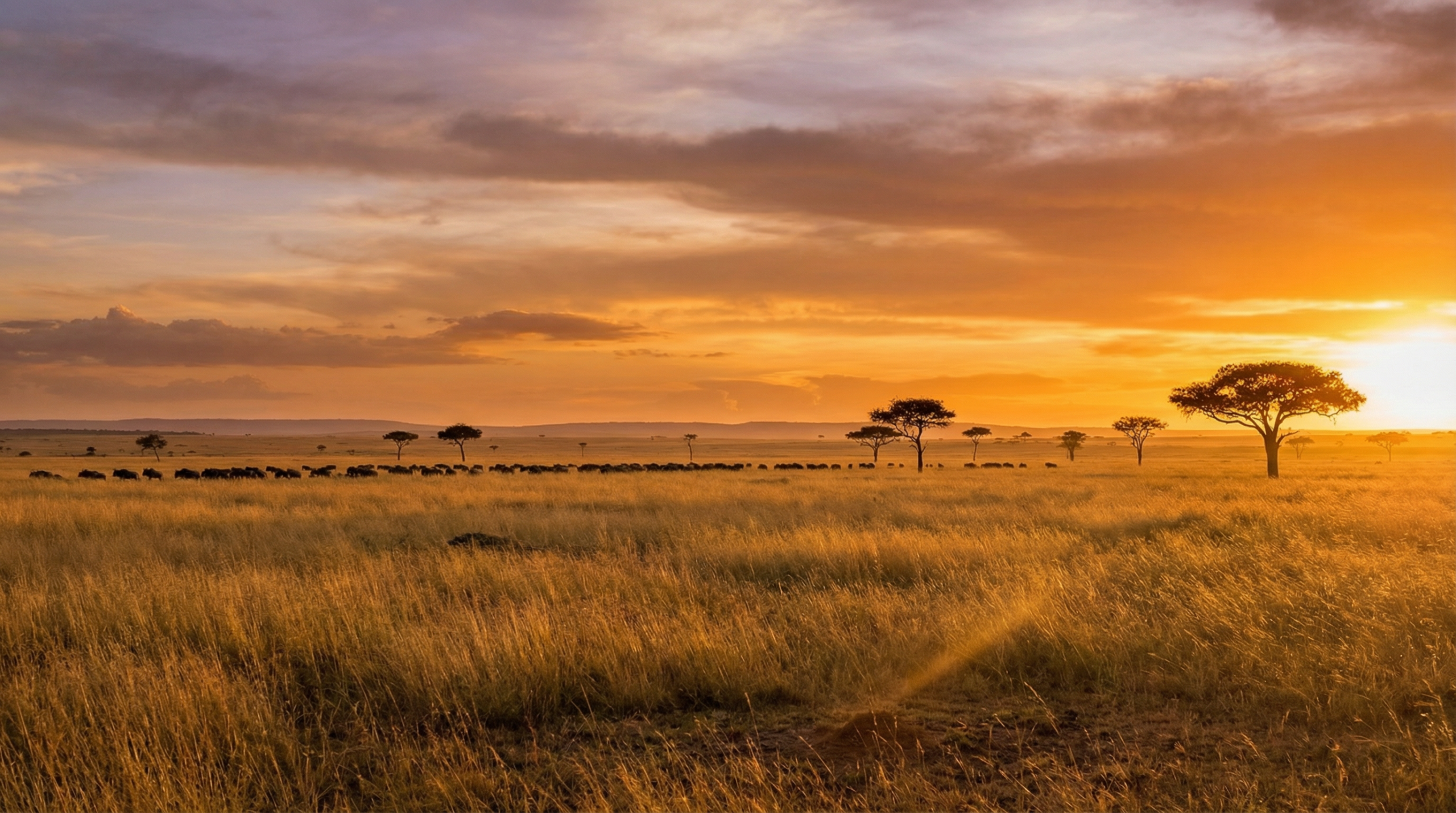
The Complete Guide
Your Journey to the Maasai Mara Begins Here
Everything you need to know about choosing and booking the safari of a lifetime in Kenya's most iconic wildlife reserve.
The Maasai Mara is not just a destination—it is a pilgrimage for anyone who has ever dreamed of witnessing Africa's untamed wilderness. Spanning over 1,500 square kilometers of rolling grasslands, acacia-dotted plains, and winding rivers, this legendary reserve in southwestern Kenya offers an unparalleled window into the natural world. Whether you seek the thundering spectacle of the Great Migration or the quiet magic of a lion pride at dawn, the Mara delivers experiences that will stay with you forever.
But planning a safari can feel overwhelming. When should you go? Where should you stay? What's the difference between the National Reserve and the private conservancies? This guide answers all your questions, helping you craft a Maasai Mara experience that matches your dreams, your budget, and your travel style.
Why Choose the Maasai Mara?
The Maasai Mara stands apart from other African safari destinations for several compelling reasons. It is home to the legendary Big Five—lion, leopard, elephant, buffalo, and rhinoceros—all of which can be spotted within a single game drive. The reserve boasts one of the highest concentrations of lions in Africa, with an estimated 850 to 900 individuals roaming its grasslands.
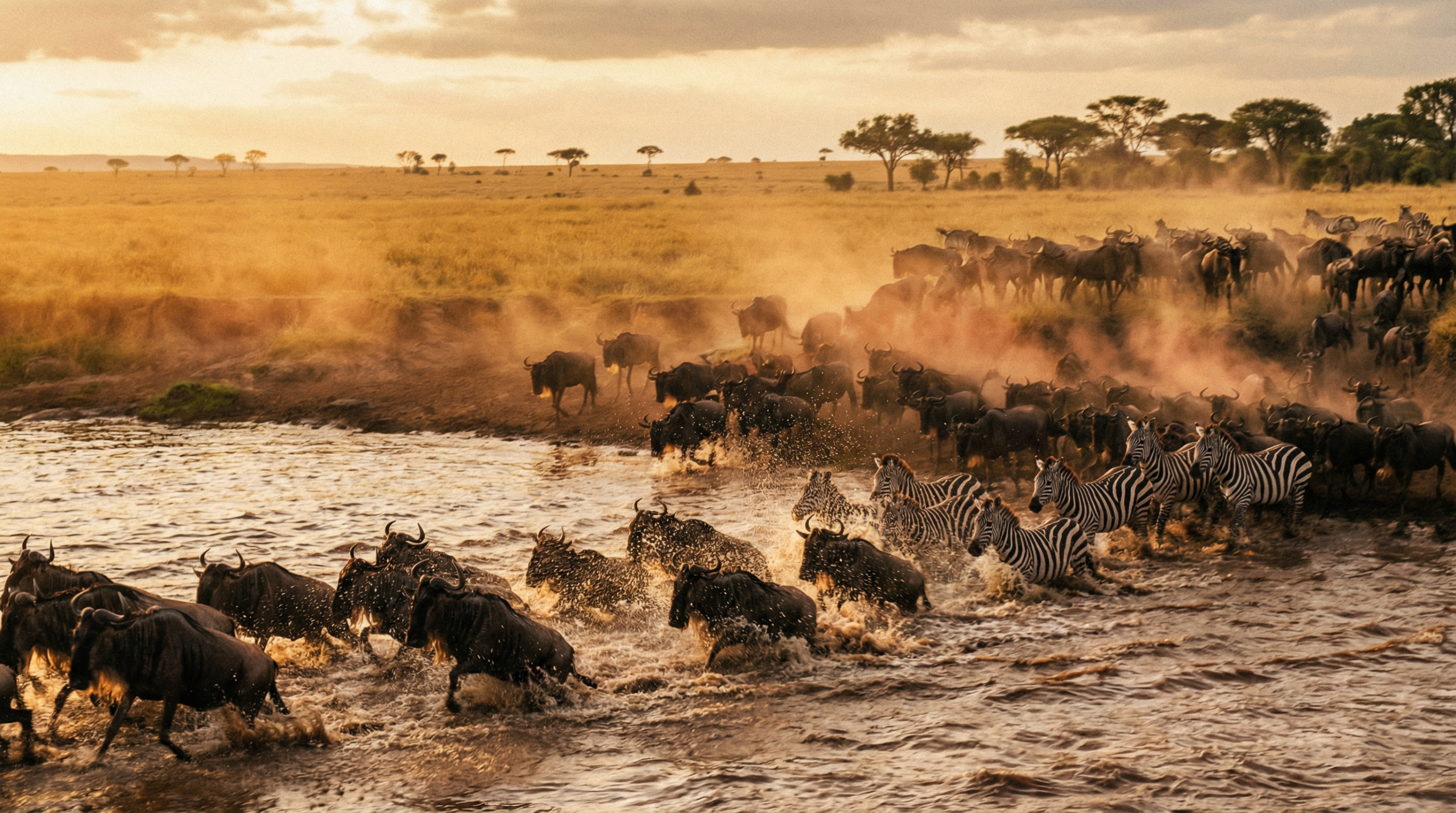
But the Mara's crown jewel is undoubtedly the Great Wildebeest Migration, often called the greatest wildlife show on Earth. Each year, between July and October, over 1.5 million wildebeest, accompanied by hundreds of thousands of zebras and gazelles, cross the crocodile-infested Mara River in a dramatic fight for survival. Witnessing a river crossing is a once-in-a-lifetime experience that no documentary can truly capture.
Beyond the wildlife, the Mara offers a rich cultural tapestry. The Maasai people, one of Africa's most iconic tribes, have lived alongside these animals for centuries. Many safari experiences include visits to Maasai villages, where you can learn about their traditions, beadwork, and harmonious relationship with the land.
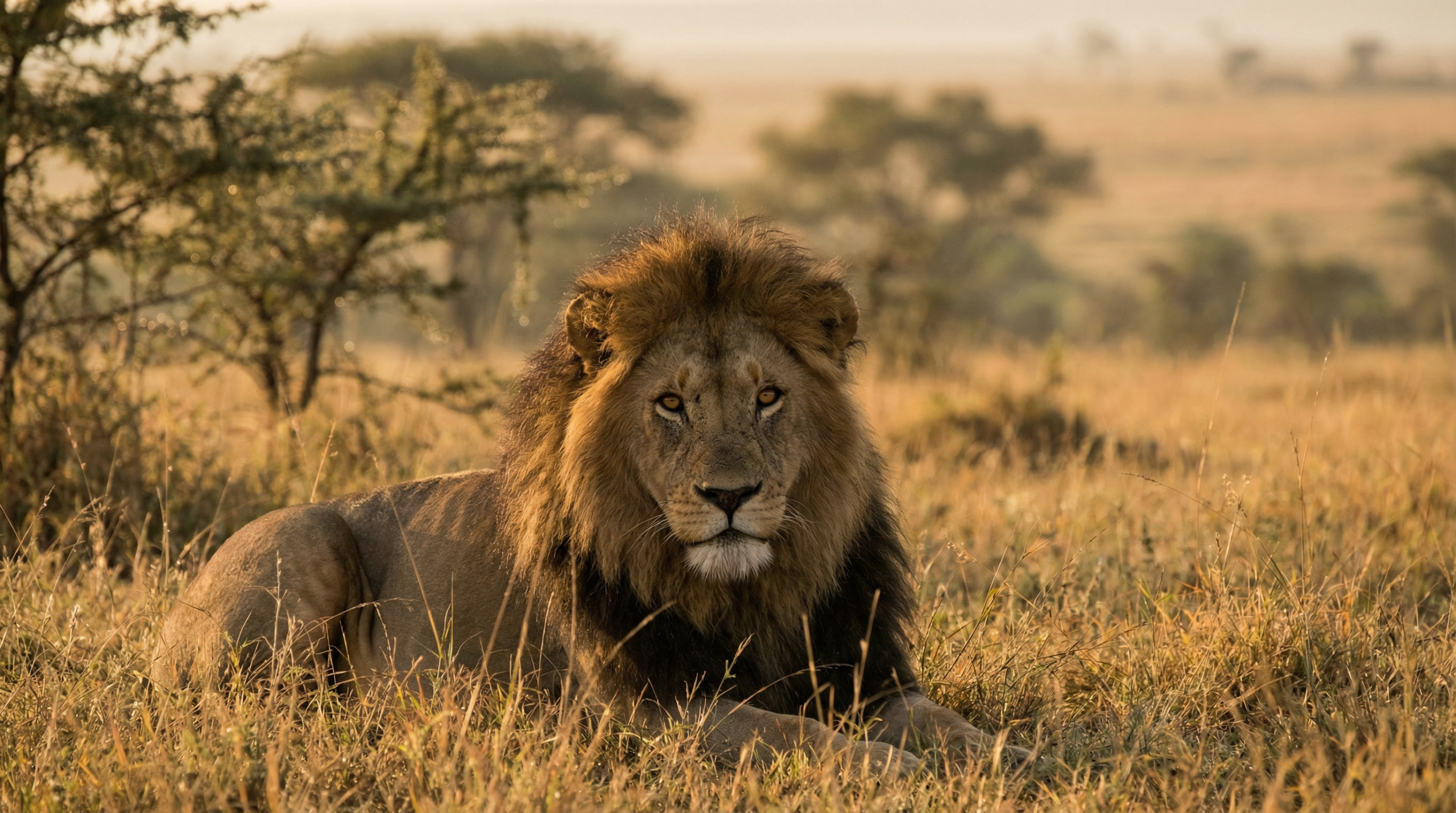
A male lion surveys his territory in the golden morning light
When to Visit: A Month-by-Month Guide
The Maasai Mara offers rewarding wildlife experiences year-round, but the timing of your visit will shape what you see and experience.
Dry Season
June – October
This is the peak safari season and the best time to witness the Great Migration. Animals congregate around water sources, making them easier to spot. The grass is shorter, improving visibility, and the weather is generally dry and pleasant.
- ✓ July–August: Peak migration, dramatic river crossings
- ✓ September–October: Excellent wildlife viewing, fewer crowds
Green Season
November – May
The "green season" brings lush landscapes, newborn animals, and significantly lower prices. While afternoon showers are common, mornings are often clear and perfect for game drives. This is also prime time for birdwatchers, with migratory species arriving.
- ✓ January–February: Calving season, predator action
- ✓ March–May: Long rains, lowest prices, lush scenery
National Reserve vs. Private Conservancies
One of the most important decisions you'll make is where to stay. Understanding the difference between the main reserve and the surrounding conservancies will help you choose the experience that's right for you.
National Reserve
- Size: 1,510 km² (583 sq mi)
- Crowds: Can be busy, especially at sightings
- Activities: Daytime game drives only
- Off-road: Not permitted
- Night drives: Not allowed
- Walking safaris: Not available
- Best for: River crossings, budget options
Private Conservancies
- Size: Varies (15+ conservancies)
- Crowds: Limited vehicles, exclusive access
- Activities: Full range of experiences
- Off-road: Permitted for closer wildlife viewing
- Night drives: Available
- Walking safaris: Guided walks offered
- Best for: Exclusivity, diverse activities
| Feature | National Reserve | Private Conservancies |
|---|---|---|
| Vehicle Limits | No restrictions at sightings | Max 5 vehicles per sighting |
| Off-Road Driving | Not permitted | Allowed for closer access |
| Night Drives | Not available | Available |
| Walking Safaris | Not offered | Guided walks available |
| River Crossings | Best location for crossings | Must drive to reserve |
| Community Impact | Government managed | Direct Maasai community benefit |
Our recommendation: For first-time visitors, consider a "twin-centre" safari that combines two or three nights in a conservancy with one or two nights near the Mara River during migration season. This gives you the best of both worlds—exclusive wildlife encounters and the chance to witness the dramatic river crossings.
Safari Activities & Experiences
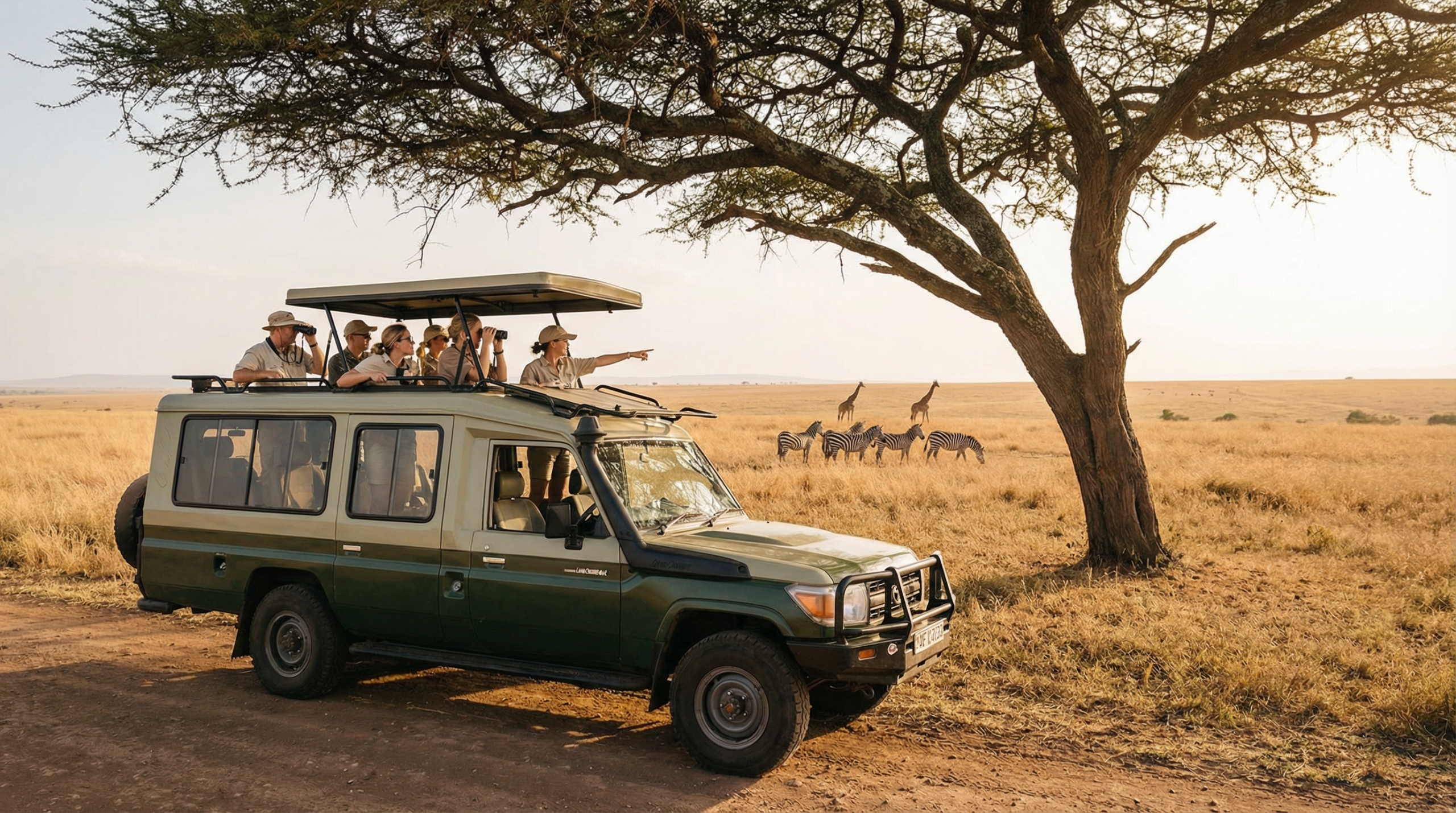
A Maasai Mara safari offers far more than traditional game drives. Here are the experiences that await you.
Game Drives
Morning and afternoon drives offer the best wildlife sightings. Early starts (around 6 AM) catch predators on the hunt, while afternoon drives capture the golden hour magic.
Hot Air Balloon Safari
Float silently over the savannah at dawn, watching wildlife from above. Includes a champagne breakfast in the bush—a truly unforgettable experience.
Maasai Village Visits
Learn about Maasai culture, traditions, and their remarkable coexistence with wildlife. A meaningful cultural exchange that supports local communities.
Walking Safaris
Available in conservancies, guided bush walks offer an intimate perspective on the smaller wonders—tracks, plants, insects, and the sounds of the savannah.
Night Drives
Exclusive to conservancies, night drives reveal nocturnal creatures like aardvarks, bush babies, and hunting leopards that you'd never see by day.
Photography Safaris
Specialized vehicles and expert guides help you capture professional-quality images. Some camps offer dedicated photography hides near watering holes.
What to Pack for Your Safari
Packing smart ensures comfort throughout your adventure. Here's your essential safari checklist.
Clothing
- ✓ Neutral colors (khaki, olive, brown)
- ✓ Light layers for temperature changes
- ✓ Long sleeves for sun & insects
- ✓ Warm fleece for early mornings
- ✓ Comfortable walking shoes
Gear
- ✓ Binoculars (essential!)
- ✓ Camera with zoom lens
- ✓ Extra memory cards & batteries
- ✓ Power bank
- ✓ Headlamp or flashlight
Protection
- ✓ Sunscreen (SPF 50+)
- ✓ Insect repellent (DEET-based)
- ✓ Wide-brimmed hat
- ✓ Sunglasses
- ✓ Lip balm with SPF
Essentials
- ✓ Passport & travel insurance
- ✓ Any prescription medications
- ✓ Reusable water bottle
- ✓ Small daypack
- ✓ Travel adaptor (Type G)
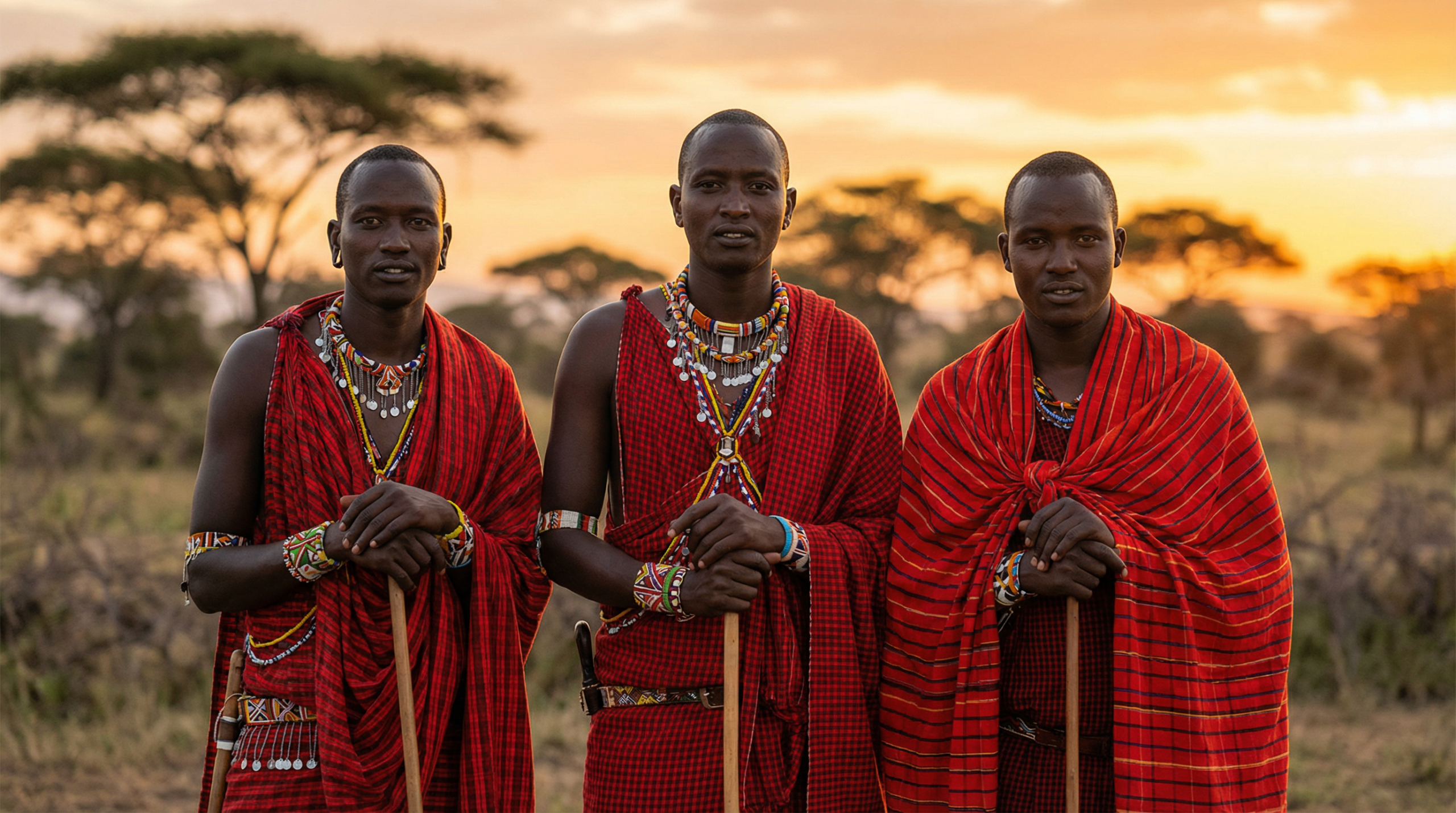
The Maasai People
The Maasai are semi-nomadic pastoralists who have inhabited the lands around the Mara for centuries. Their vibrant red shukas (robes), intricate beadwork, and distinctive jumping dance (adumu) have become iconic symbols of East African culture.
By staying in conservancies, you directly support Maasai communities. These partnerships provide sustainable income through land leases, employment, and cultural tourism, creating powerful incentives for wildlife conservation.
A visit to a Maasai village offers insight into their traditional lifestyle, from cattle herding to fire-making, and the opportunity to purchase authentic handcrafted jewelry and crafts.
Booking Tips & Practical Advice
Book Early for Peak Season
If you're planning to visit during the Great Migration (July–October), book at least 6–12 months in advance. Popular camps and lodges fill up quickly, especially those with prime locations near the Mara River.
Consider an All-Inclusive Package
Most safari lodges offer all-inclusive rates covering accommodation, meals, game drives, and park fees. This simplifies budgeting and ensures you won't face unexpected costs. Compare what's included carefully.
Choose Your Accommodation Wisely
Options range from luxury tented camps with private plunge pools to mid-range lodges and budget campsites. Tented camps offer an authentic bush experience while still providing comfort and excellent service.
Factor in Travel Time
The Mara is about 5–6 hours by road from Nairobi, or 45 minutes by light aircraft. Flying saves time and offers spectacular aerial views. Many visitors combine the Mara with other Kenyan destinations like Amboseli or Lake Nakuru.
Don't Forget Travel Insurance
Comprehensive travel insurance is essential. Ensure your policy covers medical evacuation, trip cancellation, and safari-specific activities. The Mara is remote, and medical facilities are limited.
Ready to Experience the Maasai Mara?
Let Bashan Safaris craft your perfect Maasai Mara adventure. Our expert team will handle every detail, from accommodation to game drives, ensuring an unforgettable experience.